



Broker Future Futures Brokers

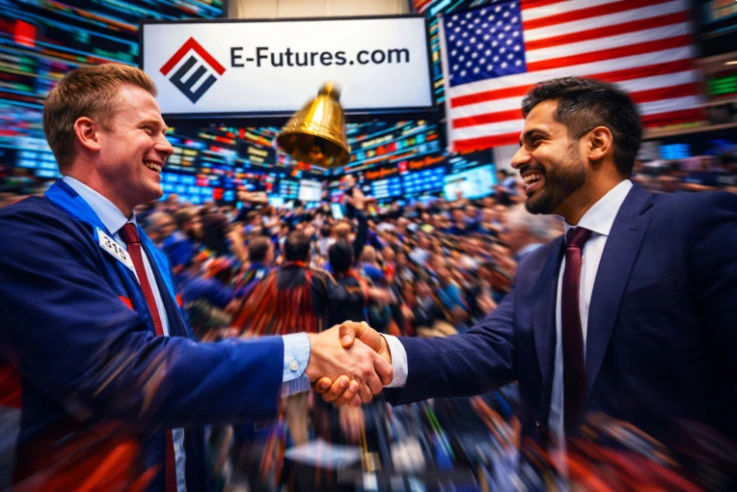
The financial world as of early 2026 is no longer defined by the shouting pits or manual ticker tapes of the past. It is a digital-first, data-driven ecosystem where the concept of a broker future has shifted toward highly automated, AI-integrated, and cloud-native services. For the modern trader, selecting from the myriad of futures brokers available is more than a matter of commission rates; it is about choosing a partner that provides the technological infrastructure required to survive in a 24/7 global market. As we stand at the beginning of 2026, the trajectory of the industry is clear: the convergence of high-speed execution, artificial intelligence, and institutional-grade accessibility for retail participants.
The Technological Vanguard of 2026
At the dawn of 2026, the futures industry has undergone a seismic shift driven by “Cloud 3.0” and the maturation of “Agentic AI.” According to recent developments from major exchanges like the CME Group, the transition of trading infrastructure to the cloud—specifically the CME Globex migration to Google Cloud—has revolutionized how futures brokers deliver market data. This migration has enabled ultra-low latency environments in private cloud zones, such as the Google Cloud Dallas Region, allowing for faster order routing and more resilient data feeds.
The role of a broker future today is to act as a bridge between these high-speed exchange cores and the trader’s desktop. We are seeing the rise of “intelligent operations,” where the trading software isn’t just a window to the market but an active participant. AI has moved beyond simple pattern recognition into the realm of “intent-driven development.” Modern platforms now allow traders to express a desired outcome—such as “protect my downside during high volatility in E-mini S&P 500 contracts”—and the system autonomously manages the execution parameters.
Shifting Trajectories: The Road Ahead for Futures Brokers
Looking forward, the trajectory of the broker future is moving toward total market democratization. The barrier between institutional and retail trading has become nearly invisible. In 2026, the industry is witnessing the normalization of digital assets as core institutional “plumbing.” The CME Group has already launched 24/7 trading for crypto futures and options, a move that forces futures brokers to provide around-the-clock support and risk management tools that never sleep.
Furthermore, the introduction of perpetual futures on regulated exchanges in 2026 has provided a new avenue for continuous trading with the same transparency and risk management frameworks as traditional listed derivatives. This shift toward “Geopatriation”—the moving of workloads to sovereign cloud providers to mitigate geopolitical risk—ensures that even in a fragmented global economy, the futures markets remain a stable pillar of price discovery.
The Rise of Multiagent Systems
One of the most significant trends moving forward is the implementation of Multiagent Systems. These are modular AI agents that collaborate on complex tasks, such as managing a diverse portfolio of commodity futures across different time zones. For the individual trader, this means your broker future likely involves an AI assistant that can scan global news, assess its impact on E-mini NQ futures, and suggest real-time adjustments to your stop-loss orders. This level of automation was once reserved for the world’s largest hedge funds but is now becoming a standard offering from top-tier futures brokers.
2026 technological advancements: what’s “new” in practical terms
Here’s how the big advancements show up for real traders at the start of 2026, using plain-language outcomes.
Higher market data throughput and the hardware/software arms race
CME’s note about market data exceeding 1Gbps and the risk of packet loss on 1Gbps connections is a public marker of where the industry is headed. For traders and firms, that accelerates a shift to better networking, better feed handling, and more attention to data hygiene. The broker future will reward futures brokers and platforms that invest early in data pipelines, monitoring, and reliable infrastructure.
Cloud migration roadmaps that prioritize resilience and tooling
CME’s ongoing communications about Globex on Google Cloud and related technical content point toward a multi-year modernization arc. For the end user, the promise is less about “cloud hype” and more about operational benefits: scaling, redundancy patterns, and observability that can reduce downtime and shorten incident resolution.
Continuous improvements in protocols, schemas, and message handling
The ongoing evolution of MDP 3.0 and SBE schema work illustrates a future where structured, high-performance messaging is the norm. That pushes brokers and platforms to stay current—because staying current is what prevents ugly surprises. In a competitive environment, “nothing breaks” is an underrated edge for futures brokers.
Better disaster recovery behavior and cleaner order-state continuity
CME’s DR process enhancements for iLink order entry focus on a more consistent experience during failovers. You may never need it—until the one day you do. In the broker future, preparedness becomes a feature, not a footnote.
Where the trajectory goes next (2026–2028 and beyond)
If early 2026 is about scaling and resilience, the next phase is about intelligence and personalization—without sacrificing transparency.
More automation, but with trader-controlled guardrails
Expect more platforms to deliver semi-automated workflows: presets, playbooks, and “one-click” risk templates that reduce execution errors. The winners will be futures brokers and platforms that keep traders in control—so automation helps you follow your plan rather than tempt you into overtrading.
Data-as-a-service thinking becomes mainstream
As exchanges add channels and throughput rises, market data handling becomes a core competency. CME’s continued channel expansions and infrastructure updates are consistent with that direction. Traders will increasingly choose a broker future that includes robust data access, stable routing, and clear documentation—especially in fast markets.
More product variety, more session coverage, more “always-on” expectations
CME has highlighted 24/7 trading for certain newer product types, which signals broader experimentation with market structure and access patterns. As this grows, futures brokers will need systems and staffing models that match extended hours—because traders will demand it.
Why E-Futures.com is a top choice for futures traders
For many traders, picking a broker is a balancing act: cost, technology, regulation, and support. E-Futures.com positions itself strongly on the combination that matters most in 2026.
Long operating history, regulated context, and trader-first economics
E-Futures.com describes itself as established in 1988 in Los Angeles, operating under NFA oversight and CFTC regulation, while offering CannonX powered by CQG and highlighting low commissions and micro day-trading margins. For the broker future, that blend is compelling: a long-running operation plus a modern platform stack, built for active traders who care about execution quality and cost clarity.
A broker + platform pairing that reduces friction
E-Futures.com repeatedly frames the broker relationship and the CannonX platform as integrated—technology plus service, not one or the other. That matters when you are scaling a strategy, adding markets, or simply trying to trade responsibly with consistent rules—and it’s why many traders narrow their futures brokers list quickly once they test the workflow.
Why CannonX is a great futures trading platform
In a crowded marketplace, platforms win when they support repeatable habits: fast entry, clean risk management, and easy review.
Built to be fast and dependable, with CQG’s global market access backbone
Cannon Trading describes CannonX powered by CQG as focused on empowering traders with speed, flexibility, and dependability, leveraging CQG for real-time updates and secure routing. For traders, this shows up as workflow confidence: you can execute, manage, and exit without wrestling the interface—an underrated advantage when volatility rises.
Strong fit for both discretionary and system-driven traders
Whether you are clicking entries off a chart, working orders from a DOM, or running a rules-based approach, the platform value is the same: stable infrastructure plus tools that support your process. That’s the broker future in practice—less drama, more repetition, more learning. And when futures brokers are aligned with the platform, you get faster answers and fewer dead ends.
How to choose between futures brokers in 2026: a simple checklist
Execution and infrastructure
- Does your broker future include a platform stack engineered for modern market data loads?
- Does the platform have a reputation for stability in volatile sessions?
Risk tools and costs
- Are commissions transparent?
- Are margins realistic for your strategy and account size?
Human support
- Can you reach experienced futures brokers quickly?
- Are reviews and public feedback consistent over time?
FAQ: broker future, futures brokers, E-Futures.com, and CannonX
What does “broker future” mean in 2026?
“Broker future” refers to how the brokerage experience is evolving: more platform integration, more data throughput, more risk tooling, and higher expectations for uptime—especially as exchanges modernize connectivity and market data distribution.
Are futures brokers still necessary if platforms are so advanced?
Yes. Technology increases complexity. Futures brokers matter for onboarding, risk education, troubleshooting, and staying disciplined when volatility spikes—especially for newer traders who need guardrails.
What makes E-Futures.com different from many futures brokers?
E-Futures.com emphasizes its long history (est. 1988), regulated context (NFA/CFTC), trader-focused pricing, and its pairing with CannonX powered by CQG.
Why does CannonX matter in the broker future?
Because platform usability and reliability shape your process. CannonX is positioned around speed, flexibility, dependable performance, and CQG-based routing—so you can focus on execution and risk management.
How do I evaluate futures brokers using public feedback?
Look for longevity, volume of reviews, and patterns in comments about responsiveness and professionalism. Cannon Trading’s Trustpilot presence provides one lens into service consistency.
Disclaimer: Trading Futures, Options on Futures, and retail off-exchange foreign currency transactions involve substantial risk of loss and are not suitable for all investors. Past performance is not indicative of future results. Carefully consider if trading is suitable for you in light of your circumstances, knowledge, and financial resources. You may lose all or more of your initial investment. Opinions, market data, and recommendations are subject to change at any time.
Important: Trading commodity futures and options involves a substantial risk of loss. The recommendations contained in this article are opinions only and do not guarantee any profits. This article is for educational purposes. Past performances are not necessarily indicative of future results.
This article has been generated with the help of AI Technology and modified for accuracy and compliance.
Follow us on all socials: @cannontrading
