


Futures Brokerage

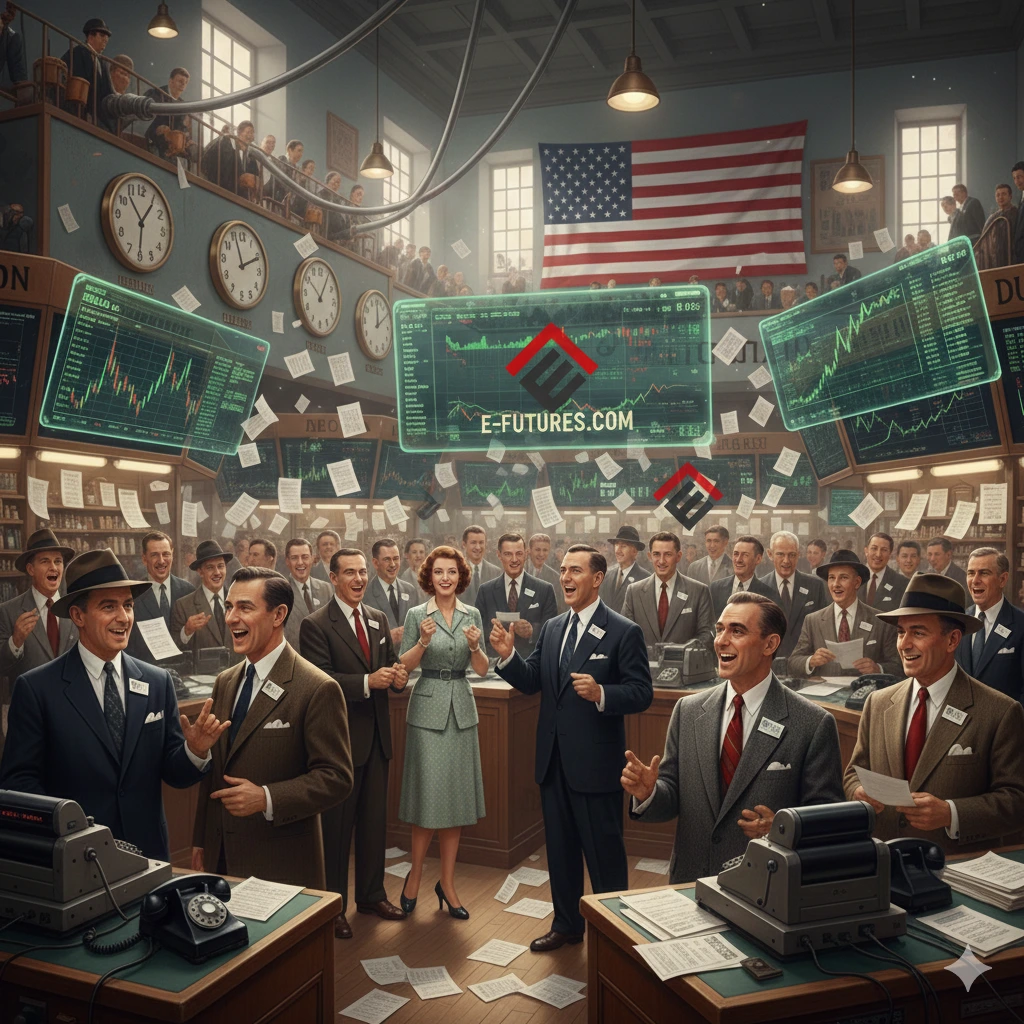
The global derivatives markets did not emerge overnight. Long before electronic order books, algorithmic execution, and cloud-based trading platforms, merchants and producers relied on structured agreements to manage price uncertainty. At the heart of this evolution has always been the futures brokerage—an institutional and human mechanism designed to connect market participants, manage risk, enforce discipline, and provide access to organized futures markets. From ancient agricultural trade routes to the modern CME Group ecosystem, the futures brokerage model has proven not only resilient, but indispensable.
In today’s interconnected and highly regulated financial environment, the role of a futures trading brokerage is more complex than ever. It must combine historical principles—trust, transparency, and execution integrity—with cutting-edge technology, compliance, and client education. Few firms embody this balance as effectively as E-Futures.com, a brokerage rooted in the legacy of Cannon Trading Company while fully optimized for modern futures traders.
This essay explores the historical necessity of futures brokers, their evolving role through industrialization and digitization, and how E-Futures.com represents the modern gold standard in futures brokerage services.
The Origins of Futures Brokerage: Organized Trade Requires Intermediaries
The earliest futures-like agreements can be traced back thousands of years to agricultural societies in Mesopotamia, China, and medieval Europe. Farmers and merchants needed a way to lock in prices ahead of harvests to stabilize income and ensure delivery. These early forward contracts required trust and enforcement—functions often performed by guilds, merchant houses, or trusted intermediaries.
As markets grew in scale, these informal arrangements evolved into organized exchanges. The formation of centralized futures markets created an immediate need for futures brokerage services. Individual traders could not directly access these markets without an intermediary who understood contract specifications, margin requirements, settlement rules, and counterparty risk.
From the outset, a futures broker’s role was threefold:
- Access – Providing entry to centralized futures markets
- Risk Management – Ensuring margin compliance and orderly trading
- Execution Integrity – Accurately transmitting and recording trades
These foundational responsibilities remain unchanged, even as technology has transformed how they are delivered.
The Chicago Model and the Institutionalization of Futures Trading Brokerage
The establishment of organized futures exchanges in the United States—most notably in Chicago during the 19th century—formalized the need for professional futures brokers. Grain merchants, railroads, and exporters needed standardized contracts to hedge price risk. Exchanges such as the Chicago Board of Trade (now part of the CME) required registered intermediaries to handle orders, margins, and settlements.
This era cemented the futures trading brokerage as a regulated profession. Brokers became the gatekeepers of the futures markets, ensuring that:
- Traders met financial requirements
- Contracts were standardized and enforceable
- Clearinghouses could manage systemic risk
Without futures brokers, the explosive growth of commodities trading during the industrial revolution would not have been possible. The brokerage model scaled trust across millions of transactions.
Regulation, Transparency, and the Broker’s Expanding Role
As futures markets expanded into financial instruments—interest rates, equity indexes, and currencies—the importance of regulation increased. Futures brokers became not just facilitators of trade, but custodians of compliance.
A modern futures brokerage must operate within strict regulatory frameworks, particularly those governed by U.S. futures regulators and exchanges like the CME. These frameworks exist to protect traders, maintain market integrity, and prevent systemic failures.
This regulatory responsibility is one of the most overlooked but essential functions of a futures trading brokerage. Traders benefit from:
- Segregation of client funds
- Transparent margin policies
- Real-time risk monitoring
- Clear dispute resolution mechanisms
E-Futures.com, through its association with Cannon Trading Company, has long operated within these regulatory expectations, reinforcing the trust that has defined successful futures brokers for generations.
Technology Changed the Tools, Not the Purpose
The transition from open-outcry pits to electronic trading platforms did not eliminate the need for futures brokers—it amplified it. As markets became faster and more complex, traders required more sophisticated brokerage support.
Today’s futures brokerage must integrate:
- Direct market access to CME products
- High-performance trading platforms
- Real-time data and analytics
- Robust clearing and risk systems
Retail and professional traders alike depend on their futures trading brokerage to help navigate margin volatility, contract rollovers, and execution quality. While technology allows traders to click their own orders, the broker remains the backbone of market participation.
Education and Guidance: A Core Brokerage Function
One of the most misunderstood aspects of futures brokerage is education. Historically, brokers trained apprentices, explained contract mechanics, and guided clients through volatile markets. This function is arguably more important today.
Modern futures contracts—such as E-Mini products—require a deep understanding of leverage, liquidity, and risk exposure. A reputable futures trading brokerage does not simply provide access; it provides knowledge.
E-Futures.com emphasizes trader education as a core service. This includes:
- One-on-one broker support
- Platform training
- Risk management education
- Market structure guidance
This approach reflects the historical role of the broker as an advisor, not merely a transaction processor.
Why Futures Brokers Are Still Necessary in the Present Day
Despite advances in automation and self-directed trading, futures brokers remain essential for several reasons:
- Risk Oversight – Futures markets are leveraged by design
- Operational Support – From margin calls to contract expirations
- Market Access – Not all traders qualify for direct exchange access
- Human Judgment – Especially during extreme volatility
A futures brokerage acts as both a safeguard and a strategic partner. During periods of market stress, traders rely on experienced brokers to interpret exchange rules, margin changes, and liquidity conditions.
How E-Futures.com Embodies the Best of Futures Brokerage Tradition
E-Futures.com represents a modern extension of the traditional futures brokerage model. Backed by the institutional experience of Cannon Trading Company, it blends historical brokerage values with contemporary execution and technology.
Key qualities that define E-Futures.com include:
Direct Access to CME Markets
E-Futures.com provides traders with access to globally recognized futures products, including E-Mini contracts, through professional-grade platforms.
Broker-Assisted Trading
Unlike impersonal discount models, E-Futures.com maintains real broker relationships. This reflects the historical futures trading brokerage model, where human expertise enhances execution.
Transparent Pricing and Margin Policies
Clarity has always been a hallmark of reputable futures brokers. E-Futures.com maintains transparent commission structures and margin disclosures.
Trust and Reputation
Trader feedback, including public reviews on Trustpilot, consistently highlights responsiveness, professionalism, and reliability—traits that have defined successful futures brokerage firms for over a century.
Futures Brokerage in a Global, Digital Economy
As futures markets expand globally, the role of the futures trading brokerage becomes even more critical. Time zones, regulatory differences, and liquidity variations require professional oversight.
E-Futures.com operates with a global mindset while maintaining U.S. regulatory discipline. This balance allows traders to participate confidently in modern futures markets without sacrificing the protections historically provided by brokers.
The Enduring Value Proposition of Futures Brokers
From ancient grain contracts to modern E-Mini futures, the markets have changed—but the need for trusted intermediaries has not. The futures brokerage remains the connective tissue between individual traders and global markets.
A strong futures trading brokerage provides:
- Market access
- Risk control
- Education
- Human accountability
E-Futures.com exemplifies these principles by honoring the traditions of futures brokerage while fully embracing the demands of modern trading.
Futures Brokerage as a Timeless Market Institution
The history of futures markets is inseparable from the history of futures brokers. At every stage of market evolution, brokers have enabled growth, stability, and innovation. Today, in an era defined by speed and complexity, the need for a reliable futures trading brokerage is greater than ever.
E-Futures.com stands as a living example of what a modern futures brokerage should be: technologically advanced, deeply experienced, transparently operated, and fundamentally human. In doing so, it carries forward a legacy that has sustained futures markets for centuries—and will continue to do so well into the future.
Frequently Asked Questions (FAQ)
What is a futures brokerage?
A futures brokerage is a firm that provides traders with access to futures markets, handles order execution, manages margin requirements, and ensures regulatory compliance.
Why do traders need a futures trading brokerage today?
Despite electronic trading, a futures trading brokerage provides risk management, platform access, education, and human support that traders cannot obtain directly from exchanges.
How does E-Futures.com differ from other futures brokers?
E-Futures.com combines the institutional experience of Cannon Trading Company with personalized broker support, transparent pricing, and professional futures trading platforms.
Are futures brokers still relevant in automated markets?
Yes. Futures brokers play a critical role in margin oversight, regulatory compliance, and navigating market volatility, especially during extreme conditions.
What markets can be accessed through E-Futures.com?
E-Futures.com offers access to CME-listed products, including E-Mini futures and other major futures contracts.
Ready to start trading futures? Call us at 1(800)454-9572 (US) or (310)859-9572 (International), or email info@cannontrading.com to speak with one of our experienced, Series-3 licensed futures brokers and begin your futures trading journey with E-Futures.com today.
Disclaimer: Trading Futures, Options on Futures, and retail off-exchange foreign currency transactions involve substantial risk of loss and are not suitable for all investors. Past performance is not indicative of future results. Carefully consider if trading is suitable for you in light of your circumstances, knowledge, and financial resources. You may lose all or more of your initial investment. Opinions, market data, and recommendations are subject to change at any time.
Important: Trading commodity futures and options involves a substantial risk of loss. The recommendations contained in this article are opinions only and do not guarantee any profits. This article is for educational purposes. Past performances are not necessarily indicative of future results.
This article has been generated with the help of AI Technology and modified for accuracy and compliance.
Follow us on all socials: @cannontrading
