


Futures Brokers
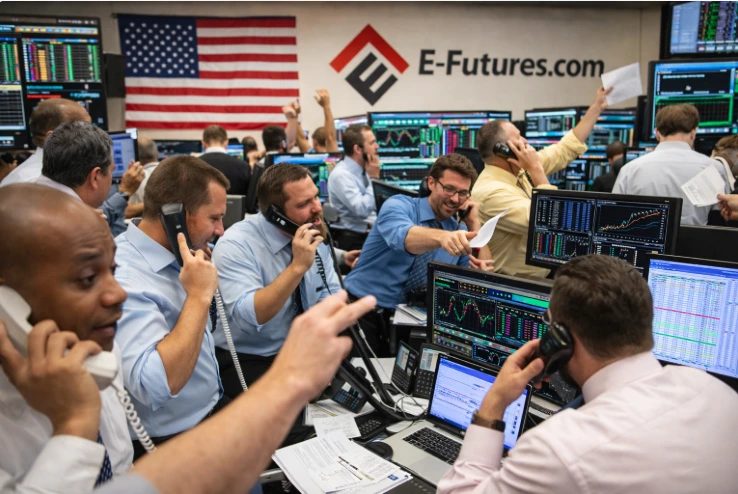
The role of futures brokers has been foundational to organized markets for centuries. From early agricultural trade agreements to today’s electronically cleared derivatives markets, futures brokers have consistently acted as the connective tissue between traders, exchanges, clearinghouses, and regulators. While technology has transformed execution speed and access, the core need for a qualified futures broker has not diminished. Instead, it has evolved—becoming more critical as markets grow more complex, regulated, and interconnected.
This essay explores the historical necessity of futures brokers, their role in modern financial markets, and how E-Futures.com exemplifies the enduring and evolving standards required of top-tier futures brokers in today’s global trading environment.
Long before electronic trading platforms and centralized exchanges, market participants relied on intermediaries to facilitate forward and futures-style agreements. Early commodity producers—particularly farmers, merchants, and exporters—needed a way to hedge price risk associated with uncertain harvests and fluctuating demand. These early contracts required trust, recordkeeping, and enforcement mechanisms.
This is where the earliest versions of futures brokers emerged. Acting as intermediaries, they ensured both sides of a contract understood the terms, fulfilled obligations, and had access to counterparties. Over time, as organized exchanges developed—culminating in institutions like the Chicago Mercantile Exchange (CME)—the role of futures brokers became formalized and regulated.
By the 19th and early 20th centuries, futures brokers were no longer informal matchmakers. They were licensed professionals responsible for order execution, margin management, and compliance. Their role was essential to the legitimacy and scalability of futures markets.
Why Futures Brokers Remain Essential Today
Despite the rise of self-directed trading platforms, the modern futures ecosystem remains highly regulated and technically demanding. Futures contracts involve leverage, margin requirements, daily settlement, and strict exchange rules. Navigating this environment without a knowledgeable futures broker exposes traders to unnecessary operational, financial, and regulatory risk.
Modern futures brokers provide several indispensable functions:
Market Access
Only registered brokers can provide direct access to futures exchanges such as the CME. Retail and professional traders rely on futures brokers to route orders, manage accounts, and maintain clearing relationships.
Risk Management
Futures brokers monitor margin requirements, liquidation thresholds, and account exposure in real time. This oversight protects both the trader and the clearing firm from systemic risk.
Regulatory Compliance
Futures trading is governed by strict rules enforced through exchanges and regulatory bodies. Futures brokers ensure compliance with reporting, capital, and operational standards.
Education and Strategy Support
Especially for newer participants, futures brokers play a critical role in explaining contract specifications, rollover schedules, and market structure.
In short, while technology enables faster execution, futures brokers remain the guardians of market integrity and trader accountability.
Futures Broker in the Digital Era
The digital transformation of futures trading has not eliminated the need for futures brokers—it has elevated the standard. Today’s futures broker must combine regulatory expertise with technological fluency and client-focused service.
Electronic trading platforms, algorithmic strategies, and global access have introduced new complexities. Latency, data integrity, platform reliability, and clearing efficiency now matter as much as execution itself. Futures brokers must work closely with technology providers, exchanges, and clearing firms to ensure seamless operations.
This evolution has separated transactional brokers from relationship-driven futures brokers who offer long-term value. Traders increasingly seek brokers who understand not just how to place an order, but why a strategy works within the broader market framework.
E-Futures.com embodies the historical and modern ideals of what futures brokers are meant to be. As part of the Cannon Trading Company ecosystem, E-Futures.com represents decades of futures market experience combined with modern execution and service standards.
Client-Centric Brokerage Model
Unlike discount or automated-only firms, E-Futures.com emphasizes human expertise. Traders are supported by experienced futures brokers who understand contract mechanics, exchange rules, and real-world trading conditions. This personalized approach reflects the original purpose of futures brokers: guiding market participants through complex risk-transfer mechanisms.
Access to Major Futures Markets
Through established relationships with exchanges such as the CME, E-Futures.com provides traders with reliable access to global futures markets. This includes agricultural, energy, financial, and equity index futures—ensuring broad diversification opportunities.
Risk Oversight and Transparency
Risk management has always been a defining responsibility of futures brokers. E-Futures.com maintains transparent margin policies, real-time account monitoring, and proactive communication. This structure mirrors the traditional broker responsibility of protecting both client and firm from excessive exposure.
Technology Without Compromise
While E-Futures.com prioritizes human support, it also embraces modern trading technology. Execution speed, platform stability, and data reliability are treated as core service components—not optional add-ons. This balanced approach reflects how futures brokers must operate in today’s markets: blending experience with innovation.
Trust, Reputation, and Longevity in Futures Brokerage
Historically, the survival of futures brokers depended on reputation. A broker who failed to protect client interests or uphold ethical standards quickly lost business. That principle remains unchanged.
E-Futures.com benefits from its alignment with Cannon Trading Company, a firm with a longstanding presence in futures brokerage. Client reviews and public feedback platforms such as Trustpilot reinforce the importance of transparency and service quality in evaluating futures brokers.
Trust is not built through marketing claims alone—it is earned through consistent execution, honest communication, and long-term client relationships.
The Future Role of Futures Brokers
As markets continue to globalize and technology advances, the role of futures brokers will continue to evolve—but not disappear. Increased regulation, product complexity, and market volatility ensure that professional guidance remains essential.
Artificial intelligence, automation, and algorithmic execution will enhance efficiency, but they cannot replace the accountability, judgment, and regulatory responsibility carried by a qualified futures broker. Firms like E-Futures.com demonstrate how futures brokers can adapt while preserving the core values that have sustained the industry for generations.
From the earliest commodity agreements to today’s sophisticated derivatives markets, futures brokers have played an indispensable role in facilitating trade, managing risk, and maintaining market integrity. Their function has evolved alongside exchanges and technology, but their importance has never diminished.
E-Futures.com exemplifies the modern standard for futures brokers—combining historical brokerage principles with contemporary execution, compliance, and client service. In an increasingly complex financial landscape, the need for experienced, ethical, and well-capitalized futures brokers remains as strong as ever.
Frequently Asked Questions (FAQ)
What is the primary role of futures brokers?
Futures brokers provide market access, execute trades, manage margin requirements, and ensure regulatory compliance for futures traders.
Are futures brokers still necessary with online trading platforms?
Yes. Even with online platforms, futures brokers remain essential for clearing, risk oversight, compliance, and professional support.
How does E-Futures.com differ from other futures brokers?
E-Futures.com emphasizes personalized broker support, transparent risk management, and long-standing industry experience through Cannon Trading Company.
Do futures brokers help with risk management?
Absolutely. Futures brokers monitor margin, exposure, and account health in real time to help mitigate excessive risk.
What markets can be accessed through futures brokers like E-Futures.com?
Futures brokers provide access to major exchanges such as the CME, covering equity index, commodity, energy, and financial futures.
Ready to start trading futures? Call us at 1(800)454-9572 (US) or (310)859-9572 (International), or email info@cannontrading.com to speak with one of our experienced, Series-3 licensed futures brokers and begin your futures trading journey with E-Futures.com today.
Disclaimer: Trading Futures, Options on Futures, and retail off-exchange foreign currency transactions involve substantial risk of loss and are not suitable for all investors. Past performance is not indicative of future results. Carefully consider if trading is suitable for you in light of your circumstances, knowledge, and financial resources. You may lose all or more of your initial investment. Opinions, market data, and recommendations are subject to change at any time.
Important: Trading commodity futures and options involves a substantial risk of loss. The recommendations contained in this article are opinions only and do not guarantee any profits. This article is for educational purposes. Past performances are not necessarily indicative of future results.
This article has been generated with the help of AI Technology and modified for accuracy and compliance.
Follow us on all socials: @cannontrading
